A SIKKIM HIMALAYAN RITUAL ARTEFACT · ONE OF A KIND

A drum given in the forest, by those who did not give their names.

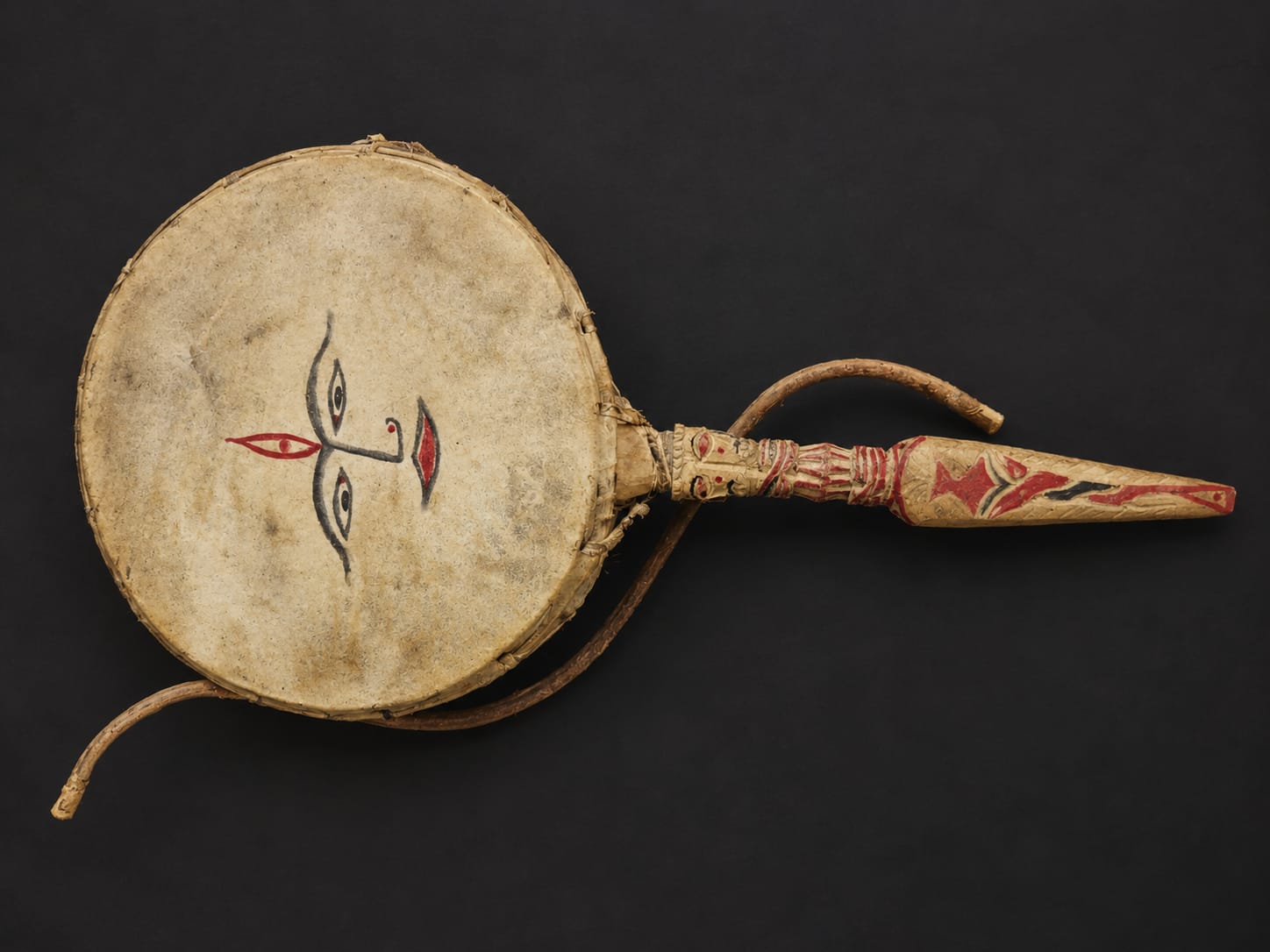
The Banjhankri Dhyangro is a hand-crafted frame drum bearing a painted divine face on one side and a vermilion swastika on the other. This is the story of how it came to its keeper, and an invitation to its next guardian.

Front face of the Banjhankri Dhyangro

The Story, as its keeper tells it

Beside the waters of Banjhankri Falls in Sikkim, where mist rises through old forest, Acharya Dr. Suraj Kumar Pathak sat in long meditation. According to his account, a group of tall, luminous figures emerged from the trees, unlike any tribe he had known. Their presence overwhelmed him, and he lost consciousness.

Days later he awoke and found them waiting. They called him an enlightened soul and placed a drum in his hands, a gift carrying the blessings of their ancestors, to be preserved as a reminder that true wealth is spiritual awakening.

For years the drum remained with him as a quiet treasure. Now, after careful thought, he is offering it to a guardian who will honour it.
Where the legend lives

The Ban Jhankri

In Himalayan folk tradition of Nepal, Sikkim and Darjeeling, the Ban Jhankri is the wild forest shaman, a figure said to live in the deep woods, teach healers, and move between the human and spirit worlds. The name Banjhankri itself points to this lineage.

The Dhyangro

The dhyangro is the double-faced frame drum of the jhankri, struck with a curved stick. Its steady beat is used in healing rites and invocations, and is understood as a vehicle carrying the shaman into trance and prayer outward.

Shiva and the forest

Many jhankri traditions link their craft to Shiva as Lord of the Wild, and to the damaru, the drum of creation. The dhyangro sits within this wider Himalayan thread of sound as sacred power.

Symbols and what they mean

The divine face

A watchful presence with a vertical mark on the brow, read as awareness and protection.

The swastika

An ancient symbol of auspiciousness (svasti) in Hindu, Buddhist and Jain traditions, long predating its later misuse in Europe.

The carved handle

A figure-headed grip in red and ochre, shaped for the hand that carries the rhythm.

Natural materials

Wood, hide and natural pigment, tying the object to the forest it is said to come from.

Why a guardian might want it

A rare piece of Himalayan shamanic material culture. A centrepiece for a museum, private collection or meditation space. A story that travels with the object. Many collectors and practitioners hold such drums as objects of reverence and inspiration. No spiritual, financial or healing outcome is promised; the value of this piece lies in its craft, heritage and meaning to its keeper.

Provenance and documentation

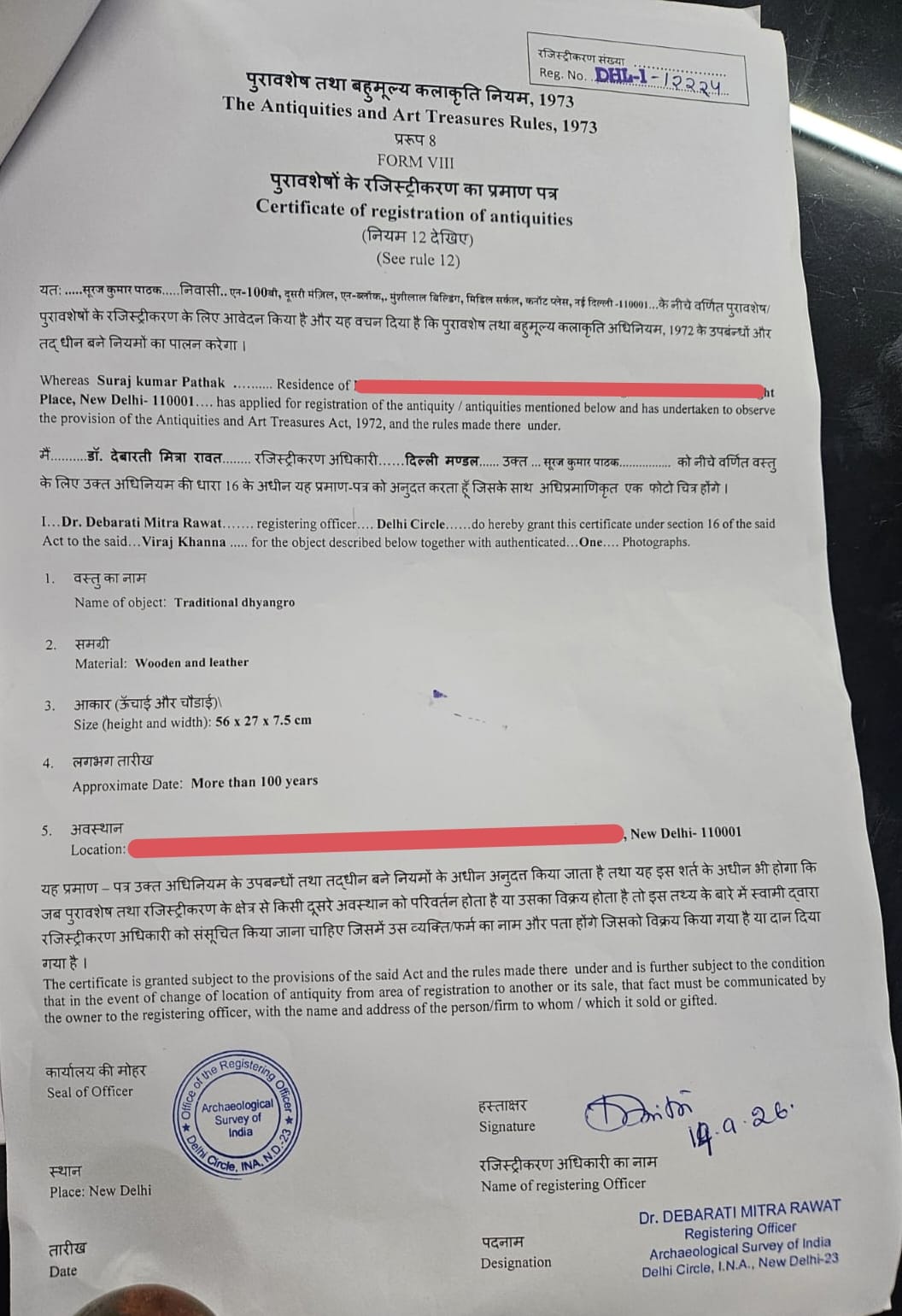
Archaeological Survey of India Ceritifed Antique

ASI Certificate

Private enquiry

Offered by private negotiation to serious institutions, collectors and patrons. Indicative asking price: ₹999 crore (approx. US$ 99 Million).

Write to the owner's office

Viewings by appointment only. Sale subject to verification of documents and applicable law.